Proud Supporters of the Australian Wildlife Rehabilitation Conference 2014
 Wildlife Rescue Magazine
  • Home
  • Magazine
    • Issue One >
      • Bandicoot
    • Issue Two >
      • Echidna>
        • Echidna Enclosure
      • Platypus Video
    • Issue Three>
      • Megabats
    • Issue Four >
      • Tawny Frogmouths
      • Wombat
      • Wombat Mange Treatment
      • Wombat Story - Strathewen
      • Wombat Weight Chart
      • Sarah's Accident - Southern Hairy-nosed Wombat
    • Issue Five>
      • Brushtail Possums
    • Issue Six>
      • Kookaburra
      • Plovers in Care
      • Willy Wagtail
    • Issue Seven>
      • Sugar Gliders
      • Wildhaven Wildlife Sanctuary
      • Issue 7 Success Story - Wedgetail Eagle
    • Issue Eight
    • Issue Nine>
      • Macropology by Cheryl Dooley
    • Issue Ten
  • Shops
    • Bat Shell Jewellery
    • Pendants
    • Keyrings
    • Cards>
      • Greeting Cards
      • Postcards
    • Wildlife Books>
      • Kids Books and Games
    • First Aid>
      • First Aid Wholesale
    • Zazzle
  • Animals & Birds
    • Brushtail Possums>
      • Brushtail Possum "How To" video
      • Possum Charts
      • Brushtails - Popcorn & Bob
    • Echidna>
      • Echidna Enclosure
      • Echidna being born - video
    • Kookaburra
    • Megabats>
      • Worming of Flying Fox Pups
      • Bandicoot
    • Microbats>
      • Tasmanian Microbats
      • Video of Feeding Microbat
    • Platypus Video
    • Plovers in Care
    • Ringtail Possum
    • Sugar Gliders
    • Wombat>
      • Wombat Mange Treatment
      • Wombat Weight Chart
      • Sarah's Accident - Southern Hairy-nosed Wombat
      • Wombat story - Strathewen
    • Willy Wagtail
  • Subscribe Today!
    • Subscribers Only Area
  • Contact
    • About Us
    • Links
  • Previous Advertisers
    • Everything Wildlife
    • Grafton Vet
    • Humane Research
    • Huon Bush Retreats
    • Judy Paulson
    • Microchips Australia
    • Outdoor Cameras
    • Oxbow Australia
    • Rocklily Wombats
    • Rosenberg Publishing
    • Ruth Waterhouse
    • Troy Laboratories
    • Wildlife Preservation Society of Qld
    • Wildlife Supplies
    • Wildlife Tourism
    • Wombaroo
    • Tips to creating your advertisement
  • Testimonials
  • Tips to creating your advertisement
  • Success Stories
    • Speckles the Magpie
    • Baby Possum - or is it?
    • A Twine in the Night
    • Long-tailed Bandicoot
    • A Koala Baby named 'Joey'
  • State Regulations - Wildlife Carer
  • Photos
  • Wildlife Parks & Zoos
    • Bonorong Wildlife Park
    • Tasmanian Devil Conservation Park
    • Tasmania Zoo
    • Trowunna Wildlife Park
    • ZooDoo
    • Natureworld
  • Blog

Echidna Enclosure - How to Build

Echidna Enclosures


Echidna's are notorious for being escape artists, not only can they dig under fences but they are even able to climb out of pens.
Many zoos throughout the world choose not to have them on display for this reason, have a look at the echidna enclosure adopted  by the San Diego Zoo in the United States - 100% escape proof and 100% unattractive and definitely not a happy place for an echidna.

Echidna's love to dig - their paws are especially made, with long claws that allow them to scratch and dig in the Australian outback.

To see great photos and loads more information on Echidnas please go to our free online magazine - Issue Two - Click Here

Tip: Click the photos to make them bigger...
Picture
An Echidna Enclosure in the San Diego Zoo

Echidna's in Care - Transporting

When an echidna comes into care they will be frightened.
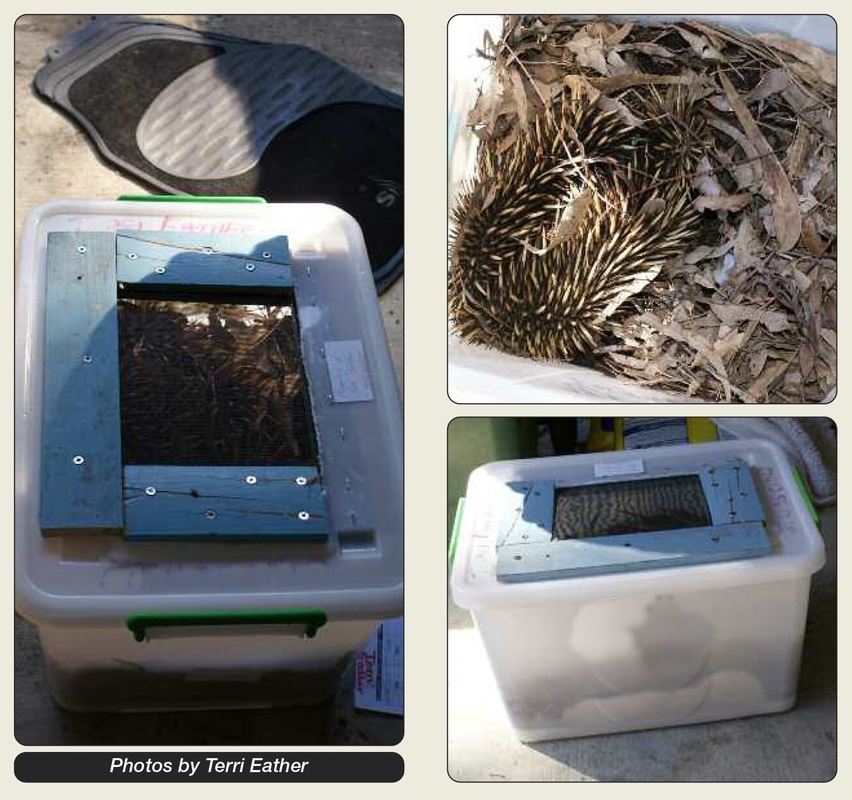
When transporting them one should consider the fact that echidna's are very good escape artists and so it is necessary to have a lid on top of any container you transport them in.

Transporting them in cardboard or timber crates is not advisable as they can dig out of them.
Plastic containers for a short time are acceptable (just for transporting) but if left for a long period the echidna will work their way out of these too.

When transporting, make sure that you put some mulch or hay to hide under, this will help calm them.

Weighting the top of the lid is also necessary as Echidnas are extremely good at getting through cracks.

Make sure their are no loud noises, such as dogs barking or a car radio (however low you may think the sound is) and no animals sniffing around the container.
For more information of the care of Echidna's please go to our free online magazine Issue Two - click here
Picture
Transporting of an echidna can be tricky

Echidna Enclosures - Long term

Sometimes an echidna must stay in care longer and an enclosure must be erected for it.

So far the best structure found is the use of water tanks cut in half.

The animal cannot climb the slippery sides and they cannot dig out.

Filling the bottom with dirt and mulch and adding hollow logs they can hide under or in will make them feel secure.

A termite mound can be added in the centre (one way to do this is to get a bucket filled with termites and dirt directly from a nearby termite mound and plopped upside down in the enclosure)

For more information on foods for echidnas please go to our wonderful online magazine Issue Two - Click Here
Picture
A watertank cut in half is perfect for holding an echidna in care

A Wildlife Magazine with 
a Difference

Wildlife Rescue Magazine - PO Box 456 - St Helens - Tasmania - 7216 - Tel:  0413 587 613
PLEASE NOTE:
Our subscription entitles you to an electronic copy of our e-magazines and e-book.
SUBSCRIBE
Picture

Terms and Conditions

Privacy
Design by DivTag Weebly Templates

The Wildlife Rescue Magazine

The Wildlife Rescue Magazine is an absorbing training manual it has been downloaded by wildlife carers, zoologists, biologists, veterinarians, zoo keepers, vet nurses, charity organizations, charities looking for ideas for fundraising, lovers of wildlife and animals, animal handlers, rangers, vet nurses, greenies, animal management controllers, volunteers, seniors, photographers, bird societies, pet shop owners, snake handlers, wildlife souvenir merchants, wildlife food producers, wildlife artists, accommodation which have wildlife on property, tour providers who provide wildlife viewing, animal welfare groups and suppliers, adventure/hiking shops, clothes merchants, Australiana merchants, wildlife societies including wombat conservation, bat conservation, Tasmanian devil conservation, quoll conservation ... etc and is devoted to bringing FREE up-to-date wildlife caring information to everyone.

Wildlife Rescue Magazine, 40 Sowells Rd
Alberton TAS - 7263, Australia
Contact Ph. - 03 63531019

WRM Magazine Copyright 2012